
Cometary Dynamics and Observational Perspectives: April 2026
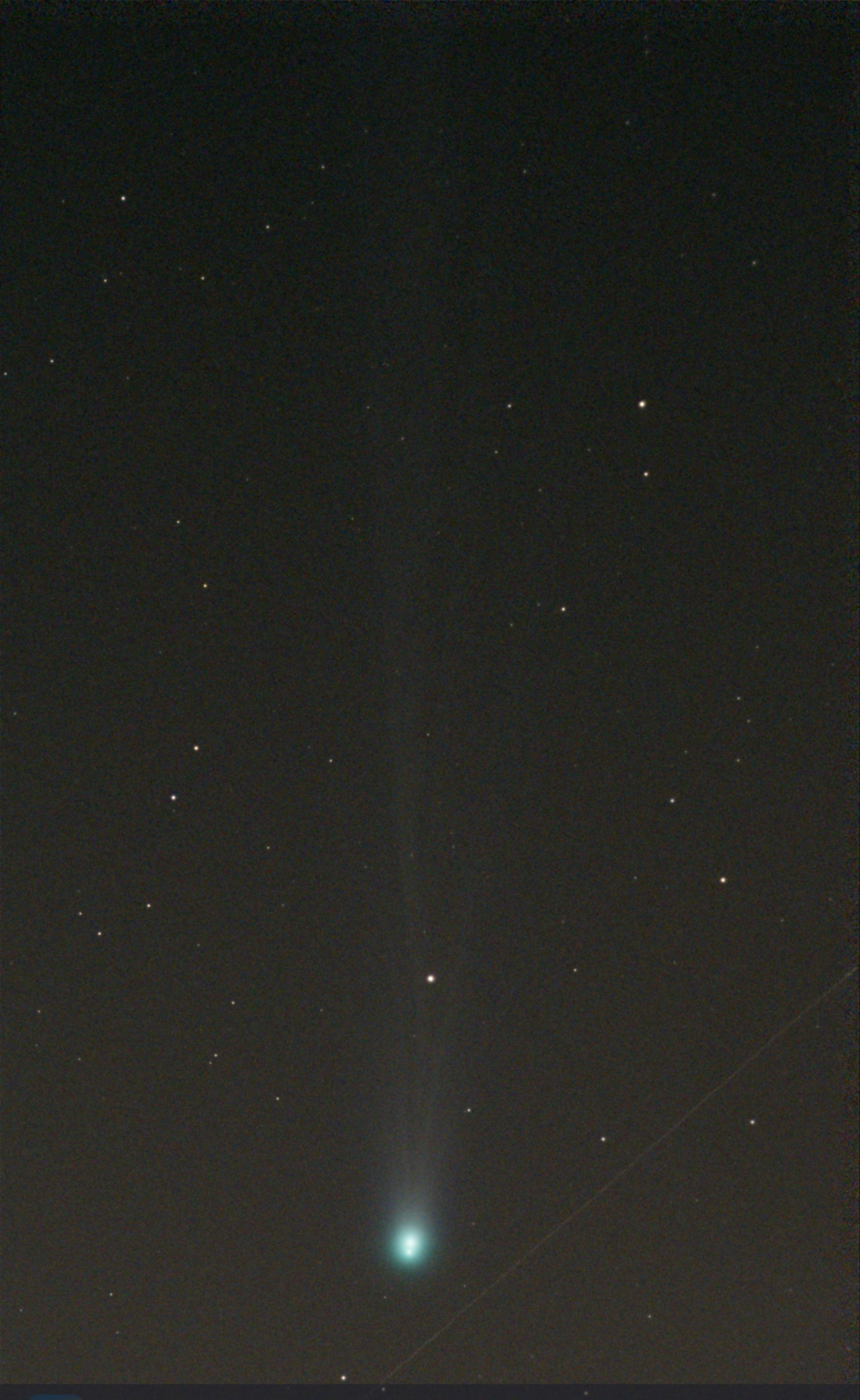
As the nights of April 2026 unfold, the celestial stage is set for the arrival of a special visitor from the outer reaches of our solar system. This month offers a unique window into the world of comets—those ethereal, icy wanderers that have captivated human imagination for millennia. At StarGazing India, we believe that understanding these objects deepens our appreciation for the dynamic and ever-changing nature of the cosmos. This guide provides a deep dive into the science of comets and a practical plan for observing the spectacles of April 2026.
1. The Anatomy of a Comet: Cosmic Snowballs in Motion
Before we turn our telescopes to the sky, let's understand what we are looking for. A comet is essentially a "dirty snowball" composed of ice, rock, and dust, often just a few kilometers across. For most of its life, it remains a dark, frozen nucleus in the cold expanse of the outer solar system.
Its transformation begins as its vast, elliptical orbit brings it closer to the Sun.
- The Coma: As the nucleus warms, its ices sublimate (turn directly from solid to gas), creating a glowing, fuzzy atmosphere called a coma, which can expand to be larger than a planet.
- The Dust Tail: Solar radiation pressure pushes the fine dust particles away from the coma, forming a broad, curved, and often yellowish tail that reflects sunlight. This tail follows the comet's orbital path.
- The Ion Tail: The solar wind—a stream of charged particles from the Sun—ionizes the gases in the coma and pushes them straight away from the Sun, creating a faint, narrow, and often bluish ion (or gas) tail.
2. April's Highlight: The Arrival of Comet C/2026 F3 (Stargazer)
The main event for April 2026 is the passage of Comet C/2026 F3 (Stargazer), a long-period comet making its first known journey into the inner solar system. Discovered last year by an amateur survey, it is predicted to reach peak brightness in mid-April.
Key Facts for Observers in India:
- Peak Visibility: April 10th - 20th, 2026.
- Expected Magnitude: Predicted to peak around magnitude +5, making it a faint naked-eye object from very dark sites, but an easy target for binoculars.
- Location in Sky: Throughout mid-April, the comet will be journeying through the constellations of Auriga and Perseus, high in the northwestern sky after sunset.
- Moon Interference: The New Moon falls on April 19th, providing perfectly dark, moonless skies for the latter part of the comet's peak visibility window.
3. How to Observe the Comet: A Multi-Instrument Approach
Observing a comet is a rewarding experience that changes depending on the tools you use.
A. Naked-Eye Viewing
From a truly dark location like the Rann of Kutch or a remote Himalayan village, find a spot away from all artificial lights and let your eyes adapt for at least 20 minutes. Look towards the northwest. You won't see a sharp point like a star, but a small, faint, fuzzy patch of light. This is the comet's coma. Don't expect to see a long, dramatic tail with the naked eye unless the comet has an unexpected outburst.
B. Binocular Observing
This is the sweet spot for comet hunting. A standard pair of 10x50 binoculars will transform the faint smudge into a definite object. You will be able to clearly resolve the bright, condensed core (the pseudo-nucleus) and see the coma extending outwards. You may even be able to trace the beginning of the dust tail as a faint fan of light. Use a star chart app to find its precise location each night.
C. Telescopic Views
A small telescope (4-6 inches) at low power will provide a breathtaking view. The coma will fill the eyepiece, and you'll be able to study its structure. Look for subtle jets or fans of material emanating from the nucleus. The dust tail will appear more defined, and you might be able to detect the faint, straight line of the ion tail if conditions are perfect.
4. Astrophotography: Capturing a Ghostly Visitor
Comets are fantastic photographic targets.
- Wide-Field Shots (DSLR/Mirrorless with Tripod): Use a standard or wide-angle lens (14mm-50mm) to capture the comet within its starry environment.
- Settings: ISO 1600-3200, Aperture f/2.8 or wider, Shutter speed 15-30 seconds.
- Composition: Frame the comet with a constellation or a landscape element like a tree or mountain for a sense of scale.
- Telescopic Imaging: For a more detailed shot of the coma and tail structure, you'll need to attach your camera to a telescope on a tracking mount. This requires stacking multiple short exposures (e.g., 30-60 seconds each) to bring out the faint details without trailing the stars.
5. Conclusion: A Fleeting Moment in Cosmic Time
The passage of a comet like C/2026 F3 (Stargazer) is a beautiful and fleeting event. This icy wanderer has traveled for thousands of years from the dark fringes of our solar system to grace our skies for just a few weeks. Observing it is a profound reminder of the vastness of space and the elegant clockwork of orbital mechanics.
We at StarGazing India invite you to take this opportunity to connect with the cosmos. Whether you are using just your eyes, a pair of binoculars, or a powerful telescope, take a moment this April to look up and witness a traveler from the dawn of our solar system.
Wishing you clear skies!